
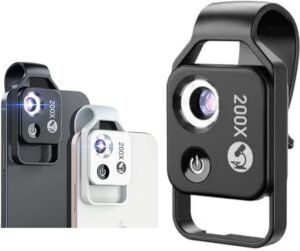
Let’s dive into this Nanozoom 200x magnification Zoom beast and see what it’s all about. As someone who’s always been fascinated by the unseen world, and also someone who’s perpetually fiddling with my phone’s camera, this little gadget sounded like it was tailor-made for me. When it arrived – a tad later than I’d hoped, mind you – I couldn’t wait to get it attached and start exploring.
Nanozoom 200x Magnification Zoom, Nanozoom Cell Phone Lens, Nano Zoom Lens 200x for iPhone, Phone Microscope with Cpl Lens/LED Light and Universal
I’ve been playing around with it for a bit now, and honestly, it’s been quite the eye-opener – pun intended, of course! As someone who’s always been a tad curious about the microscopic world, but without the budget or space for a proper lab microscope, this nifty attachment promised a sort of mobile, accessible gateway. It’s the kind of thing that sparks your imagination, wondering what hidden details lie just beyond our everyday vision. Is it a gimmick, or can it genuinely unlock a new perspective? Let’s find out.
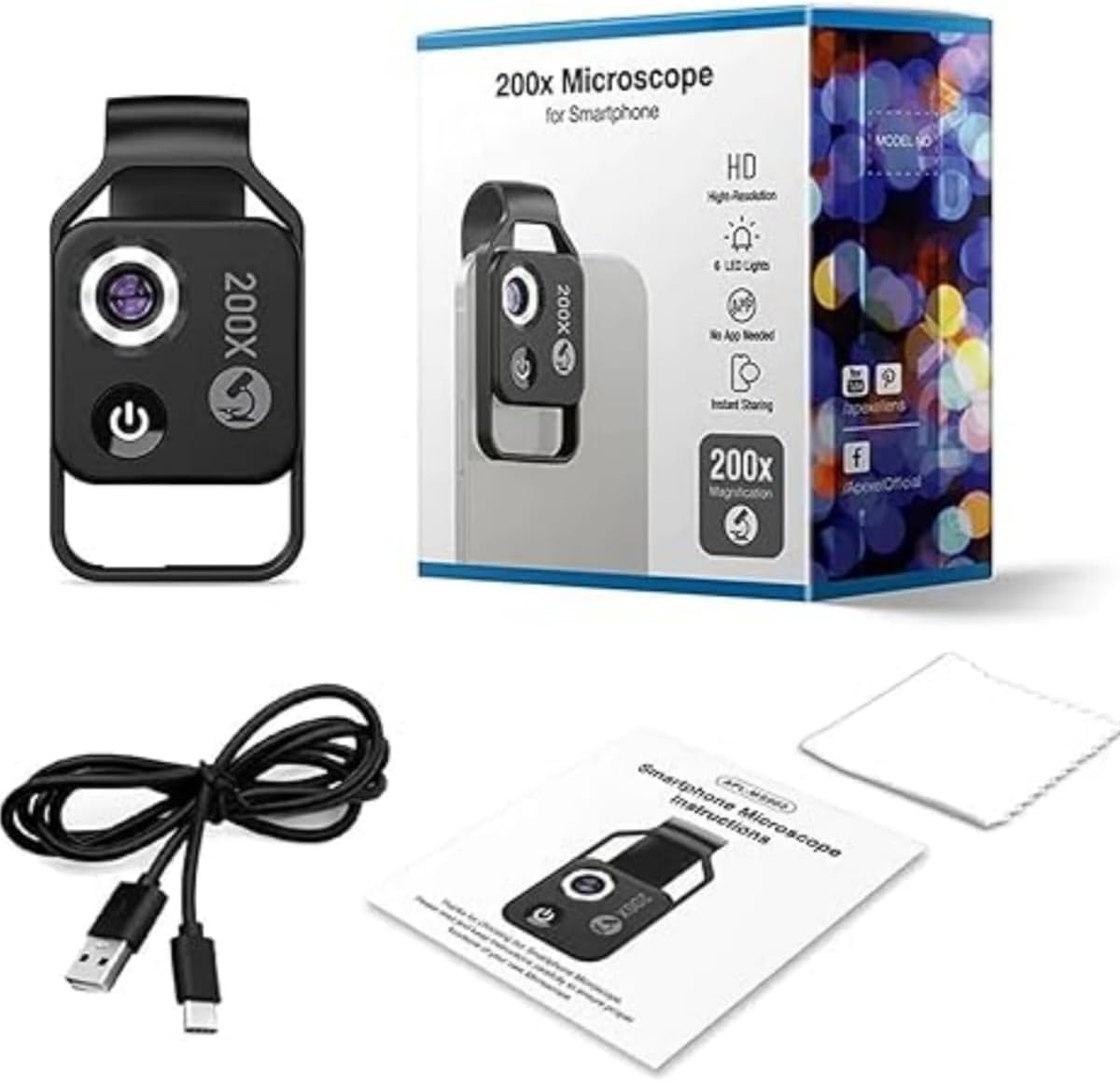
Image courtesy of Amazon.co.uk
Design, Function, and Core Specifications
It’s remarkably compact, which is exactly what you’d want for a phone accessory. The idea of transforming my humble iPhone into a high-powered microscope felt a bit sci-fi, to be honest. But the promise of 200x magnification, a CPL lens to cut through glare, and even its own LED light, all in a portable package? That’s a potent combination for anyone with a penchant for detail, whether it’s for a hobby, educational purposes, or simply satisfying a curious mind.
So, what exactly is this Nanozoom 200x magnification Zoom lens all about? Fundamentally, it’s a clip-on microscope for your smartphone that amplifies your phone’s camera capabilities to an astonishing degree. It boasts a hefty 200x magnification, meaning you can zoom in on minute details that would otherwise be invisible to the naked eye. Think the intricate patterns on a butterfly’s wing, the fine texture of a leaf, or even the microscopic structures of fabrics. It’s designed to be a portable solution, so you can take it anywhere – on a nature walk, to a museum, or even just for a closer look at everyday objects around the house.
Standout Features for Enhanced Imagery
One of its standout features, as mentioned in the description, is the integrated CPL lens. Now, for those not in the know, CPL stands for Circular Polarizing Filter. In simpler terms, under bright lighting conditions, especially when trying to photograph shiny or translucent objects, you often get unwanted reflections and glare. This CPL lens is a game-changer for microscopic photography because it effectively cuts through that glare, allowing the true colours and details of your subject to shine through. This results in images with enhanced contrast and saturation, making those microscopic landscapes far clearer and more visually striking than they would be otherwise.
Navigating the world of smartphone photography can be a bit of a minefield. We’ve all seen those stunning macro shots online, and yearned to achieve similar levels of detail in our own snaps. While a dedicated microscope is one route, the idea of a portable, clip-on solution that transforms your existing iPhone (or other smartphone) into a powerful magnifying tool was incredibly appealing. So, with the Nanozoom 200x perched on my phone, I was ready to embark on my own miniature safari.
Further enhancing its usability is the built-in LED light. When you’re trying to illuminate incredibly small subjects at extreme magnifications, good lighting is absolutely crucial. The Nanozoom 200x magnification Zoom provides its own illumination, ensuring your subject is well-lit without needing external light sources. This is particularly helpful when you’re examining things in less-than-ideal lighting conditions or when trying to capture clear, well-exposed shots. The charging interface is a modern USB-Type-C, which is a welcome touch, and the lighting time of 2-4 hours is decent enough for most exploration sessions before needing a recharge.
The main draw, of course, is the “200x Magnification Zoom.” This isn’t just a minor tweak; it’s a significant jump that allows you to see details on everyday objects that are frankly mind-boggling. Think intricate textures on leaves, the delicate structure of fabric, or even individual fibres in a piece of paper. It really opens up a new perspective on the world right under your nose, and it’s incredibly addictive to use.

Image courtesy of Amazon.co.uk
Practical Usage, Setup, and Shooting Tips
Attaching the Nanozoom 200x magnification Zoom is straightforward, with its universal clip mechanism. It’s designed to work with a wide range of smartphones, and I had no trouble fitting it onto my iPhone. Once in place, you simply open your phone’s camera app, zoom in as much as you can, and then use the Nanozoom’s focus ring to get your subject razor-sharp. It’s an intuitive process, and after a few tries, I was comfortably switching between normal shots and ultra-macro investigations.
Now, before you go snapping pictures of everything in sight, here are a couple of pointers from my own experiences. Firstly, patience and a steady hand are your best friends. At 200x magnification, the slightest tremor can send your subject wildly out of focus. Try to rest your phone on a stable surface, or even use two hands to steady it. Secondly, experiment with the lighting. Sometimes the built-in LED is perfect, other times you might want to dim it or even use an external light source from an angle to create interesting shadows and highlight textures. Don’t be afraid to play around with it to find what works best for your subject.
As with any gadget, there are of course its advantages and disadvantages. On the plus side, the superb attachment quality, as one customer lauded, is definitely evident. The magnification is genuinely impressive for a pocket-sized device, opening up a world of detail. The CPL lens is a significant bonus for improving image quality by reducing glare. The built-in LED light is incredibly useful, and the universal clip makes it versatile for different phones. It’s portable and relatively easy to use, making it an excellent entry point into microscopy.
The integrated LED light is another thoughtful feature. When you’re trying to get that super-close-up shot, lighting can be a real challenge. The built-in LED casts a focused beam onto your subject, ensuring it’s well-lit for clearer images and allowing you to get those shots even in dimmer environments. Being able to charge it via USB-Type-C is a modern touch, and the promised 2-4 hours of lighting time seems practical for a good burst of exploration.
Pros, Cons, and Answering Common Questions
A frequently asked question is often about the image quality at such high magnifications. Generally, for a portable phone lens, the quality is surprisingly good, especially when using the CPL filter to manage reflections. You can capture detailed shots, though they will have a distinct “phone camera” aesthetic rather than the polished look of professional microscopy. Another common query revolves around what you can actually see. You can explore the intricate details of insects, plant structures, fibres in clothing, grains of salt, the surface of printed text, and much more. It’s fantastic for educational curiosity and for getting creative with close-up photography.
So, what are the downsides? Well, as mentioned, the focus can be a touch sensitive. You really need to be precise with the focusing ring to get that crystal-clear shot at such high magnification. Also, while the build quality is good, it is a plastic component attached to your expensive smartphone, so you’ll want to be mindful of its handling to avoid any accidental drops.
Now, let’s tackle some of those burning questions. “Does it scratch my phone screen?” Generally, no. The clip is designed with rubberised padding to protect your device. However, as with anything you attach to your phone, it’s always wise to be gentle and avoid forceful application. Will it work with any phone case? It depends on the case’s thickness. If your case significantly protrudes around the camera lens, you might find it a tight squeeze or it might not align perfectly.
For anyone looking to get more out of their smartphone photography, I’d definitely recommend experimenting with the CPL lens. Play around with its rotation to see how it affects glare and saturation – you’ll be surprised at the difference it can make, especially on shiny surfaces like insect exoskeletons or metallic objects. Also, find a stable surface to rest your phone on, or even better, a small tripod, as any slight shake at 200x magnification will result in blurry images. Patience is key!
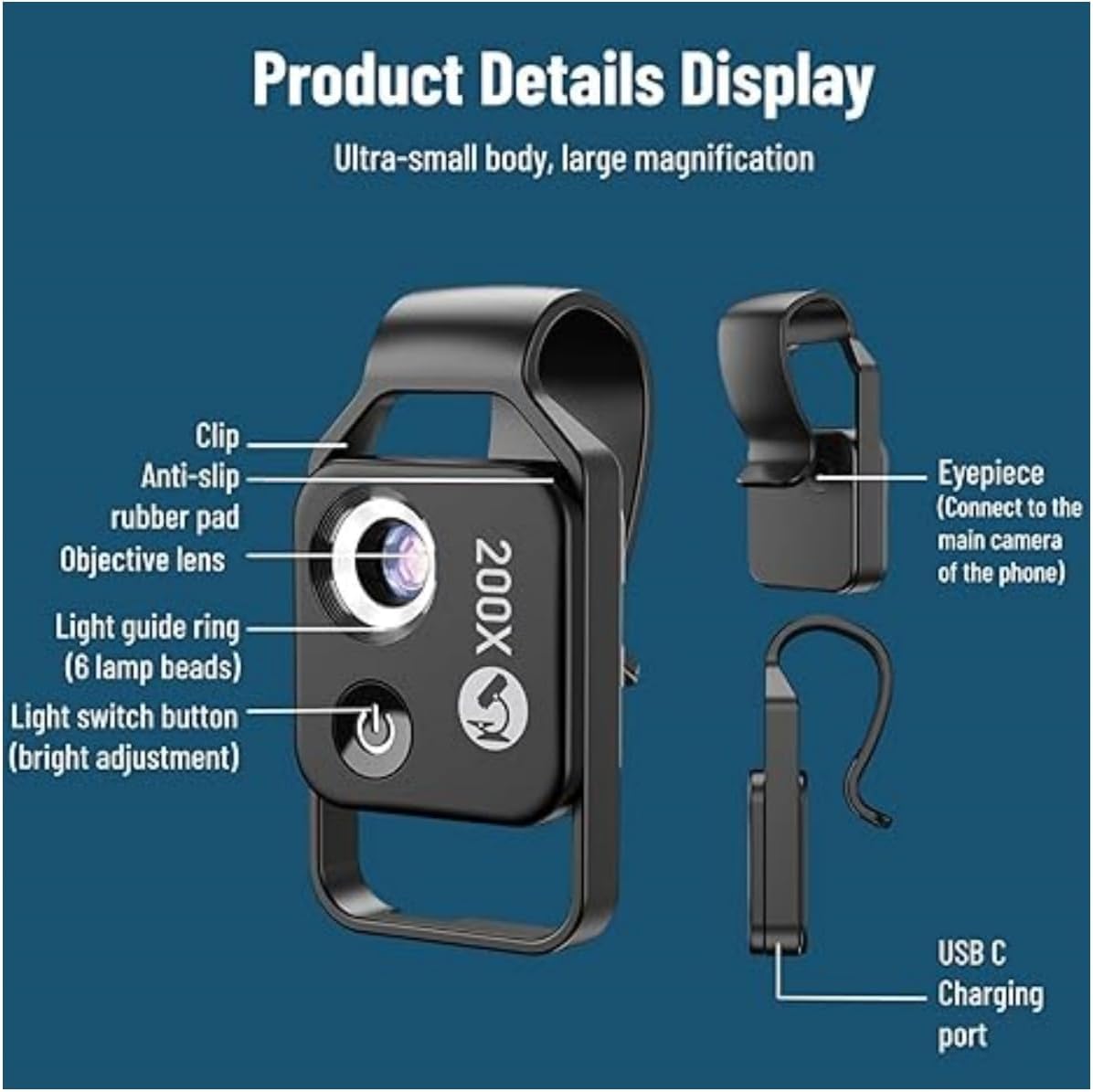
Image courtesy of Amazon.co.uk
Final Verdict and Overall Value
In conclusion, the Nanozoom 200x magnification Zoom Lens is a genuinely fun and rather impressive piece of kit. It democratises microscopic exploration, bringing it right into your pocket. Whether you’re a student, a hobbyist, or just someone with an insatiable curiosity about the small world around us, this lens offers a unique and accessible way to investigate. It’s not going to replace a high-end scientific instrument, but for its price and portability, it delivers a remarkable experience.
This little Nanozoom 200x lens has definitely added a new dimension to my mobile photography. It’s provided hours of entertainment and discovery, transforming everyday objects into fascinating subjects. If you’ve ever found yourself staring at a ladybird and wishing you could see its spots in finer detail, or marveling at the complexity of a flower petal, and you’re looking for an accessible way to explore these worlds, then this is certainly an option worth considering.
Ultimately, for its price point and the capabilities it unlocks, the Nanozoom 200x Cell Phone Lens is a remarkable little gadget. It’s a fantastic entry point into the world of mobile microscopy, offering a fun and engaging way to explore the magnified world around us. While it requires a little patience and a steady hand, the rewards in terms of shared discoveries and stunning visual detail are well worth the effort.
So, if you’ve been looking for a way to get a closer look at the wonders hidden in plain sight, or if you’re looking for a unique and engaging gift, I’d certainly recommend giving the Nanozoom a whirl. Just be prepared to be amazed by the details you’ve been missing every single day. It’s a small investment for a significantly expanded perspective on the world. Happy zooming!
Learn more about the Nanozoom 200x magnification Zoom
Disclosure Policy: As an Amazon Associate, we earn from qualifying purchases.